Saturday, August 15, 2015

What is the point of marketing?

What is the point of marketing?


That sounds like a silly question, but I'm serious. What is the point of marketing? You might say "well that's obvious. The point of marketing is to sell products" and you would be partially correct You might think "marketing is how companies tell people about the products they make" and this is part of the story, but not the whole enchilada.
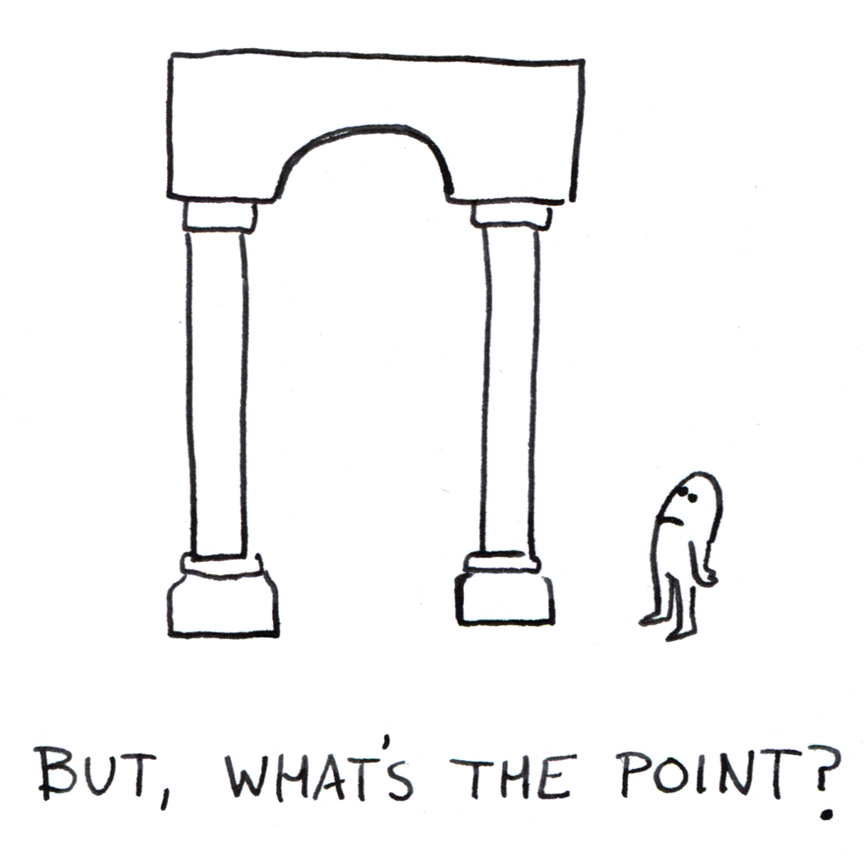


The real purpose of marketing is to separate emotions about products from the actual utility they provide.

Think about that for a second.

But wait...

Aren't most of the ads you see trying to create a feeling rather than give a holistic picture of what the product can actually do?  Every once and a while you see one that explains something, but for the most part the goal is to pique your interest by what they DON'T tell you and by evoking an emotional reaction. I often wonder why we don't look past these tricks and see the real motive.


I must say, I'm a bit biased being something of a pragmatist. For me, things are about function above all. I realize not everyone looks at the world this way, but for me this makes most of the ad and marketing realm feel squishy and sneaky. I never quite feel like I can trust what I'm hearing or what I'm seeing. We are not exactly talking about an industry with a track record of honesty. Most ads I see make me ask "what are they really trying to get out of this?"

"IT'S A TRAP!!"


Like we said before, the real motive is to separate feelings about a product from the function of a product. Put simply, marketing's goal is to make what should be a need-based or value-based decision and make it an emotional decision. With a good marketing campaign, you can easily cover up any shortcomings with the actual product. They have also come to find out that influencing emotions is much easier than improving the product. This makes the equation pretty scary for consumers.


This creates a world in where quality and value of a product have less influence on a purchase than does the impact of the emotional context they stick it in. For instance, let's say Starbuck coffee is average (IMHO). There is nothing special about their product yet they have grown to dominate the coffee market. How is this? Why aren't the places with better coffee winning? While there are a huge number of factors that come into play, marketing is a huge one.

We are talking about a business that has been able to use billions of dollars and a complex understanding of how our minds work to engineer emotional responses to their brand. All the sudden you have people selecting inferior products (often for more money) and ignoring products that offer a better value or would better meet their needs. Doesn't that seem irrational? It should. once a brand hits this certain "critical mass", the consumers stop really "choosing" because that brand has created an addict of sorts.


"If it ain't broke, don't fix it. Wait..."

With that in mind, I want to know why we don't have a better way to regulate the impact of marketing. It's great for businesses to be able to promote their good or service, but what happens when they get beyond promotion and into the realm of having consumers hooked or psychologically stuck? Shouldn't there be a way to help keep the balance of power when it comes to branding? How do we keep some semblance of consumer choice and decision making power when brands have such a dramatic ability to influence our behavior through driving emotions?

I will leave you with this final thought and I would love to hear opinions.

If the goal of marketing is to get us to make less rational decisions, why don't we change it?

Thanks for reading!

Chris

Thursday, August 13, 2015

Rethinking Coupons


If you are anything like me, you look through coupons regularly. There are lots of ways they get distributed and it's a full time job trying to actively use them. When you think about the myriad of offers, the variety of mediums, and the vast number of retailers or products trying to get your attention, its not surprising that the majority of these get missed. This is particularly true if you are like me and end up grabbing one or two coupons you just happen to see. The fact is that, for most of us, 99% of coupons are useless.


Coupon distribution is changing


The way companies are sending out coupons has changed dramatically over the last few years. Gone are the days of the classic print inserts you used to make your Christmas list as a kid. I spent a few years working for a major retailer and I've seen the dramatic impact of how quickly these are becoming obsolete. While right now only 10% of coupons are digital, the use of online and mobile coupons is growing faster than any other segment.

Digital creates new challenges


The exciting thing about the transition of coupons from print to digital is the new found ease of access than many customers are experiencing. Its easier than ever to search for coupons you want and use them on your phone. In fact, there are many sites and apps that are aggregating digital versions of all the coupons that used to be (or still are) in print. Google "Best Buy Coupon" and dozens of codes and coupons are bound to show up. This does, however, create a new problem.

With the old print news papers, the only way to have an old coupon was to have an old newspaper. This make it much less likely to have an expired coupon as most papers are disposed of within a week of being received. However, in the case of digital coupons the lifecycles longer without the natural purging that came with print. Once a coupon is out there, it is much more likely to stay posted and in circulation long after it has passed expiration. This means customers have to put in the effort to make sure the offers they are collecting are valid. Believe me, it's a ton of work.

Digital coupons are still not easy to use


While there are many benefits that have come with the advent of digital, there are still challenges. It is still a ton of work to search for and collect coupons from a vast number of sites and apps. It is still a toss up whether the coupons you got are going to be valid. It is still a matter of taking lots of time and coordinating tons of  moving pieces for an often immaterial payout. There has to be a better way.

With all that in mind, I put a question to you: would you use more coupons if they were automatically generated all in one place, specifically for you, right on your phone? This means you would never have to cut, search, clip, or collect coupons every again. Personally, I need a way to take advantage of all the benefits and savings that coupons offer without all the effort. In that respect, I'm lazy. I want to sit back and let my coupons come to me. I want them to be valuable, I want them to be easy to use, and I want them to be relevant.

There is a better way


We are trying to build a way for you to anonymously use your spending history to create you own coupons in one single app. As you shop, you will earn coupons to the competitors of all the places you shop. For example, say you spend $100 at Wal-Mart. Scannibal would let you earn a percentage of that $100 back to other grocery stores in your area. What if you could spend $100 and earn back a full $100 in discounts and now have valuable coupons to every other grocery store within 10 miles? We think that would be pretty cool.

We want to hear what you think!

If you are someone who uses coupons of any sort, we would love to hear the good and bad parts of your coupon experiences. If you are someone who doesn't use coupons, we would definitely love to hear why you don't. If you are someone who is just a coupon and clearance shopping nerd like me, drop a line and lets talk savings!

Thanks for reading!

Chris
chris@Scannibal.com
http://scannibal.com

Friday, July 31, 2015

We are chugging along and want you to come with us!

I'm very excited to report that we are making some great headway on the development of Scannibal! We are currently building our initial platform and planning to be able to start testing with live transactions within a month or two! If you have checked out our site or talked with me around town (Denver) and think what we are doing in interesting, we would love to have you as a tester!

We are looking for two categories of testers: Users and Businesses

Users

We are hoping to get 100ish users for our initial pilot. This is really exciting because we are going to be asking for tons of feedback from these first users. It is a great opportunity to have a real impact on the design and function of the product. How cool will it be in a couple year to be able to tell people you were user #1 for Scannibal? For this group we are looking locally since our business testers will also be local. We will make sure to let you know which businesses we are testing with and we will ask that you make at least a few qualifying transactions just for testing.

What makes a good User (for now)?

The only real requirement is that you have to be local or at least in the Denver area. Ideally you will also buy goods or services in the industries with whom we are testing (we are narrowing this down but starting with coffee shops and liquor stores). Since we are looking for local businesses as testers, having test users elsewhere won't be much help yet. However, if you are not local and are interested, send me an email and we will get you in the beta!

What we need from a good test user

Feedback is the name of the game! If you want to send me 10 emails a day telling me every single thought you had about why it sucks or why its awesome, I would love that! Seriously, we are looking for people who like trying new tech, like to save money, want to try new businesses, and want to be part of a cool project where you can make a difference.

Businesses

For those of you out there who are local business owners here in Denver, I have a couple questions for you. Do you need more traffic? Are you having a hard time competing with a major direct competitor (especially a huge corporate one)? If so, read on...

Scannibal will be the simplest and most direct way for you to run  your loyalty program and your customer acquisition program (odds are you didn't have one. Not anymore!). We are offering you a way to market directly to your competitors customers on a transaction per transaction basis. This means maximum efficiency in terms of who sees your marketing.

What's in it for my business?

Let me start by saying that if your business qualifies, we meet with you and it feels like a good fit, you will get access to the Scannibal platform for free, forever(for the most part. If you are interested, lets chat). This can be a huge long term competitive advantage for your business. This could mean you have access to a marketing tool your competition will be paying for.

What we need from a good test business

Feedback and participation are key for a good test business. We are looking for businesses that are interested in a new way to interact with customers and want to be on the leading edge with their marketing strategy. Since we are building a completely new model, It will be important to have active participation from the business as well as regular communications about how things are going. In addition, we need businesses that will help promote to their customers. We will provide a window sticker, a counter sign, and information sessions for employees on how to educate customers. That might sound like a lot of involvement, but think of it like having your business be a co-founder in our start up. We are offering a tremendously valuable deal with the free access.

How to reach out

If any of this sounds interesting or if none of this sounds interesting, get in touch via email at (chris@scannibal.com) or tweet me at@scannibalapp . I'd love to get thoughts, opinions, and any feedback on the blog, testing, or our project in general. Heck, even if you are just nerd who likes to talk about coupons and bargain shopping as much as I do, bring it on! For more info, check out http://scannibal.com.

Thanks for reading!
Chris@scannibal


Monday, June 22, 2015

An Unfair Fight

I've written briefly about consumer behavior and how we are all creatures of habit, but it's hard (if not impossible) to quantify the true impact of our habits from a shopping perspective. What most of us do not realize is that each of our purchases does not exist in a vacuum. Each purchase is part of a much larger picture big  business is building to understand and influence your future purchases. In addition, each of those purchases can have a dramatic influence on our internal decision-making process.

We will almost always be more likely to repeat a behavior once we have engaged in it a first time. This means the first purchase is the hardest for a business to generate (we plan to fix that) and if you are a small or new business, most if not all of your customers are going to be first time buyers. This is also why loyalty programs for huge retailers want to trade reward points for second and third trips to the store. It's like a drug: the retailers know you have already overcome the huge obstacle of the first purchase and now you just need a tiny nudge (your reward points) to keep coming back for more.

It makes sense, therefore, that over time as we continue to accept the reward in exchange for the additional purchase, we become more engrained and predictable in what decision we will make when it comes to that particular good or service. Over time, the "decision" erodes away to a default, learned behavior that has been engineered by that large business. Once they have created a predictable usage pattern like this, they can slowly pull away the actual value (the purchasing power of those reward points) without most customers noticing. Now they have the best of both worlds: a repeat, predictable customer who is also paying full (or nearly full) price. How is that fair?

So what's missing? If you are a small business owner, you may say "well that's true for big corporations but not for us!" and you are most likely right. The fact is that there are thousands of small or new businesses that cannot compete with the large corporate players. Some will differentiate and some will offer higher service standards, but they are all still facing the challenge of the first time customer, a problem that the corporations have a billion dollar head start on. They already have nice cozy spots carved out in the minds of almost all consumers. How to you compete with that?

That sounds bleak, but we have a solution. There will always be major players, huge marketing budgets, and engrained consumers psychology to make succeeding an uphill battle, but we intend to make it a significantly more fair fight. Scannibal provides your business with an opportunity to access new customers and drive that first interaction and transaction in a completely new, direct, and measurable way. We think small businesses are creating tremendous experiences, amazing products, and unprecedented value. We think it's time to provide a gateway to all the spectacular things small business has to offer.

Thanks for reading!
 Chris @ Scannibal


Follow us on twitter:
@ScannibalApp

Or check out our site for updates on development:
Scannibal.com

Thursday, June 4, 2015

Getting a Competitive Edge

Scannibal is a completely new mobile rewards platform that based the rewards you earn directly off of where you already shop(this is only kind of a plug. I have a point, I promise). The goal is to create a more efficient way for customers to earn, store, and easily redeem any discount they may receive while also providing value to businesses. While most of us hate advertising, businesses spend a lot of money trying to get and hold your attention. We are creating a way for both the customers and the businesses to win. Let's look at each perspective:

Customers

We are all customers, so this should be easy. What are the key things you care about when it comes to spending your money? Here are a few that come to mind (in no particular order)


  1. Value - is what i'm getting worth what i'm paying?
  2. Service - did I enjoy my experience with this business?
  3. Convenience - how easy was making the purchase?
  4. Speed - how quickly can I get this item?
  5. Price - how much do I need to spend to get this item?
  6. Quality - is the item high quality or is it cheap?
Think about how each of these plays into every single purchase you make. These are some of the key drivers of why we buy what we buy and where we buy what we buy (try saying that 5 times fast). So if we were to sweeten the deal on any given purchase, what is the best one of those characteristics to focus on? We think all of them.

Scannibal isn't just about getting a lower price or about getting more value for your dollar, it's also about experiences. When we get into habit or we get pulled in by loyalty points a business gives us AFTER we spend money, we start to limit our options. We get pulled into the big chains and the corporate warehouse stores which isn't always a bad thing, but they are spending lots of money to keep us from seeing whats out there. 

Take People's Market here in Denver. One of the freshest, friendliest, most affordable little grocery stores in Denver and they have to compete with huge stores. Our goal isn't to keep you from shopping at large corporate chains, but rather to enable the small businesses with better goods and services to give you an invitation to break out and try something new. 

Businesses

Business seems fairly cut-and-dry on the surface: make money. That is the ONLY goal, right? Wrong. While making money is important, the people that involved in making that business happen are far more important. Think about when you go to work all day. You work, they give you money. For you it is a positive cash flow transaction but for everyone else, the place you go to work is just a business like any other. Businesses want and need to succeed not only to make a profit and grow, but to support the family of employees they have making it tick. At their core, most businesses are about people and we think helping businesses succeed is about as close as you can get to helping the employees directly.

However, It's easy to think that anything that creates competition is bad. In reality, competition is actually vital to how our economy and our society work. The reason why competition is such a great thing is that it creates value and innovation. almost 100% of the things you see at your desk as you read this are a result of innovation driven out of competition. 

For example, lets say in a fiction town there are only two factors in buying cookies: flavor and price. If every business had the same flavor of cookies and charged the same price, consumers would have no reason to buy them one place versus another. Without competition, businesses (and the livelihood of their employees) is left up to chance. Creating competition pushes businesses to realize their potential and grow into stronger, more mature companies. 

At the end of the day, when a business is working around the clock to figure out how to win, all there competition has to be doing the same or they will lose. This is the equation that brought us all the amazing things we have today like computers, iPhones, and televisions. Our goal is preserve this equation by enabling the businesses looking for a new way to compete. Customers save and explore, businesses compete and grow, and the world spins madly on.

Thanks for reading! 

Check us out online and sign up for release updates:http://scannibal.com/
And follow us on Twitter:@ScannibalApp 

Chris


Monday, May 25, 2015

Coalition Loyalty

The idea of a "Coalition Loyalty Program" is something that has been prevalent in other countries for many years but is brand new to the US. Coalition Loyalty is when multiple business essentially join together to create their own rewards points. Customers can then earn rewards at any business member and redeem them at any other business member. As part of joining, a business will share there customer information with the other members. There are good and bad aspects of these programs from both a consumer and business standpoint.

Customer Benefits

  • Loyalty Flexibility - You can earn one place and reward somewhere else
  • Breadth of Earning - The number of places you can earn is greater than a normal, in-house loyalty program
  • Industry Diversity - The places you can earn and redeem spans multiple industries
These are all great things, but there are also some downsides to keep in mind.

Customers Concerns

  • Data Usage - As part of these programs, the business that are members share your information with the rest of the members so they can market to you.
  • Narrow Options within Industries - By nature, these programs want only a single business from a single industry (having more then one would create unwanted competition). This means while your rewards can span industries, you likely only have one choice per industry
These are options you will need to weigh in decided which programs to be a part of. Are you someone that has specific places you like to shop within each industry? Do you mind being constrained to a few businesses with your rewards point? Are you OK with you information being shared? 

From a business perspective, there are other benefits and concerns to these programs

Business Benefits
  • Lower Initial Investment Cost - The cost of the program is distributed over all the members, making it more accessible to small and mid-sized businesses
  • Customer Data - Being a member offers access to consumer data and a pool of customers larger than the business could gather on its own
  • Positive Rewards Transactions - Customers shop at your business to earn rewards (at full price) but redeem them somewhere else (at a discount). You get the benefit without margin hit. This is the ideal situation for a business member
  • Limited Competition - By design, there will likely only be one business per industry so it is likely that you will be the only option for customers in that program to buy your type of products.

Business Concerns


  • Customer Data - The sharing of consumer data goes both ways. You can see theirs and they can see yours
  • Other Business Members - The other business members can have a large impact on the customers the program attracts. For example, joining a coalition program that includes Walmart is likely going to be more beneficial than joining a program with a local bakery.
  • Negative Rewards Transactions - Customers earn their rewards (paying full price) at one of the other businesses and redeem them at your business (at a discount). In this case, you get the negative margin impact without the full price transaction to balance out.


Overall, these programs are good step toward the way rewards should work, but they are not quite there. Customer data is still shared which does not respect the privacy of the consumer. While there are more options, the rewards are still not as versatile as they can be. Customers are limited to only the businesses in that program with very limited options within any given industry.

Our goal at Scannibal is to completely break down the walls between where rewards are earned and where they are redeemed. We are literally re-writing the rules for how you earn rewards and we are very excited to take some of the basic ideas of "Coalition Loyalty" and turn them into something revolutionary!

Thanks for reading!
Chris @ Scannibal

Follow us on twitter: @scannibalapp or online at Scannibal.com


Tuesday, May 12, 2015

"Percent off" VS. "Dollars off"

The biggest key to what makes a coupon interesting to the majority of us is perceived value. This is the "Wow" factor when you cannot believe they would give you this kind of deal. Part of you knows its may be too good to be true (and often is) but they got over the first hurdle and they got your attention. One of the tricks marketers with use is using a percentage off versus a specific dollar amount off.

Percentage off

  • Customers generally like percentages off because this can translate in to a large dollar savings on a bigger item
  • Businesses usually dislike percentages off because they are more difficult to plan for (if you buy a pack of gum at 50% off, it may cost them $.50 but if you save 10% off a TV it may cost them $100)
  • Can be very valuable on big purchases but can be deceivingly low value on cheap items
  • Can be off of a single item, entire purchase, or individual product
  • Often used as headlines to grab your attention
  • Make sure to check exclusions for exclusions and limitations
  • The more you spend, the more absolute value they have
Dollars off
  • Many Customers do not like them as much because they feel like their savings are limited (and they are)
  • Businesses love these because they are much easier to account for in a budget since they have a defined value
  • Often have stipulations that you need to spend a certain amount to get that discount
  • Can be off a single item, entire purchase, or individual item 
  • Can translate to a huge percentage savings on smaller items, but may be a drop in the bucket on bigger purchases
  • The more you spend, the less relative value they have
Pay close attention to each of these as they can vary greatly based on what you buy. Marketers know that and will distribute coupons based on a specific behavior they are trying to get out of you. They may show "50% off!" in giant letters at the top of an offer to get your attention. Once you read further you may see that you only get 50% off the second item or on your next trip. Not noticing these details can make all the difference. Understanding some of the basic differences can help you know when to use which kind so you can maximize your savings.